If something happened to you tomorrow, would your family know where to begin? They may know you have life insurance, retirement accounts, or a financial advisor. But would they know where to find them? Who should they call? Where is your will? What bills need to be paid? What happens to your online accounts? And if you're a business owner, are there partners or key employees who need to be included?
Read More
Topics:
Asset Protection,
Life Expectancy,
Assessment Plan,
changes,
Estate Planning,
Grief,
Financial Foundation,
financial strength,
personal finances,
Family Finances,
financial freedom,
Effective Money Management,
success
A mid-year tax check-up can help prevent costly surprises down the road. With only a few months remaining before year-end, now is an ideal time to review your tax situation while there is still time to make meaningful adjustments. August marks the point where the end of the tax year begins to come into focus. A quick mid-year tax checkup can often identify opportunities to reduce your tax bill or avoid an unexpected balance due next spring.
Read More
Topics:
taxes,
Income Taxes,
Tax Planning,
Check-Up
National Friendship Day is observed on the first Sunday of August, which this year falls on August 2. The day traces its roots to the greeting card industry of the 1930s and was formally recognized by Congress in 1935. The name sounds light, but the research behind it is not. Loneliness is more common than many people realize, and it has real consequences that go beyond emotions or general wellbeing.
Read More
Topics:
Finances,
community,
Relationships
Every spring, investors begin hearing the familiar phrase, “Sell in May and go away.” The idea is simple: avoid the stock market during the summer and return in the fall. But does that strategy actually lead to better financial outcomes? The historical pattern has some basis in long-run data. The practical value has been harder to capture. Transaction costs, taxes on any realized gains, and the challenge of knowing when to get back in have frequently offset whatever seasonal effect existed. The investor who sold in May often fared worse than the one who stayed put.
Read More
Topics:
retirement,
retirement planning,
planning,
Stock Market
Financial crime is costing Americans more than ever before. The FBI's Internet Crime Complaint Center (IC3) recorded $16.6 billion in losses reported by victims in 2024, a 33% increase over 2023 and the highest figure in the center's 25-year history. Nearly 860,000 complaints were filed last year. The average loss per complaint came to just under $20,000.
Read More
Topics:
Financial planning,
Cyber Fraud
As we reach the middle of the year, June is the perfect time to step back and evaluate your financial health. While many people begin January with goals to save more, reduce debt, or improve spending habits, everyday expenses and unexpected costs can slowly push budgets off track.
Read More
Topics:
Budget,
budgeting,
Savings,
Inflation,
cash flow,
money check,
mid-year,
success
For many entrepreneurs, a business represents years of hard work, sacrifice, and financial investment. Yet surprisingly few small business owners know what their company is actually worth. A professional business valuation can provide far more than just a number, it can become an essential tool for growth, financial planning, and long-term decision-making.
Read More
Topics:
business owners,
small business,
Building a Business,
valuation
Each May, the United States celebrates National Small Business Month, honoring the entrepreneurs and local companies that power communities nationwide. While large corporations often dominate headlines, small businesses form the backbone of the American economy, driving innovation, job creation, and community development.
Read More
Topics:
small business,
community,
local
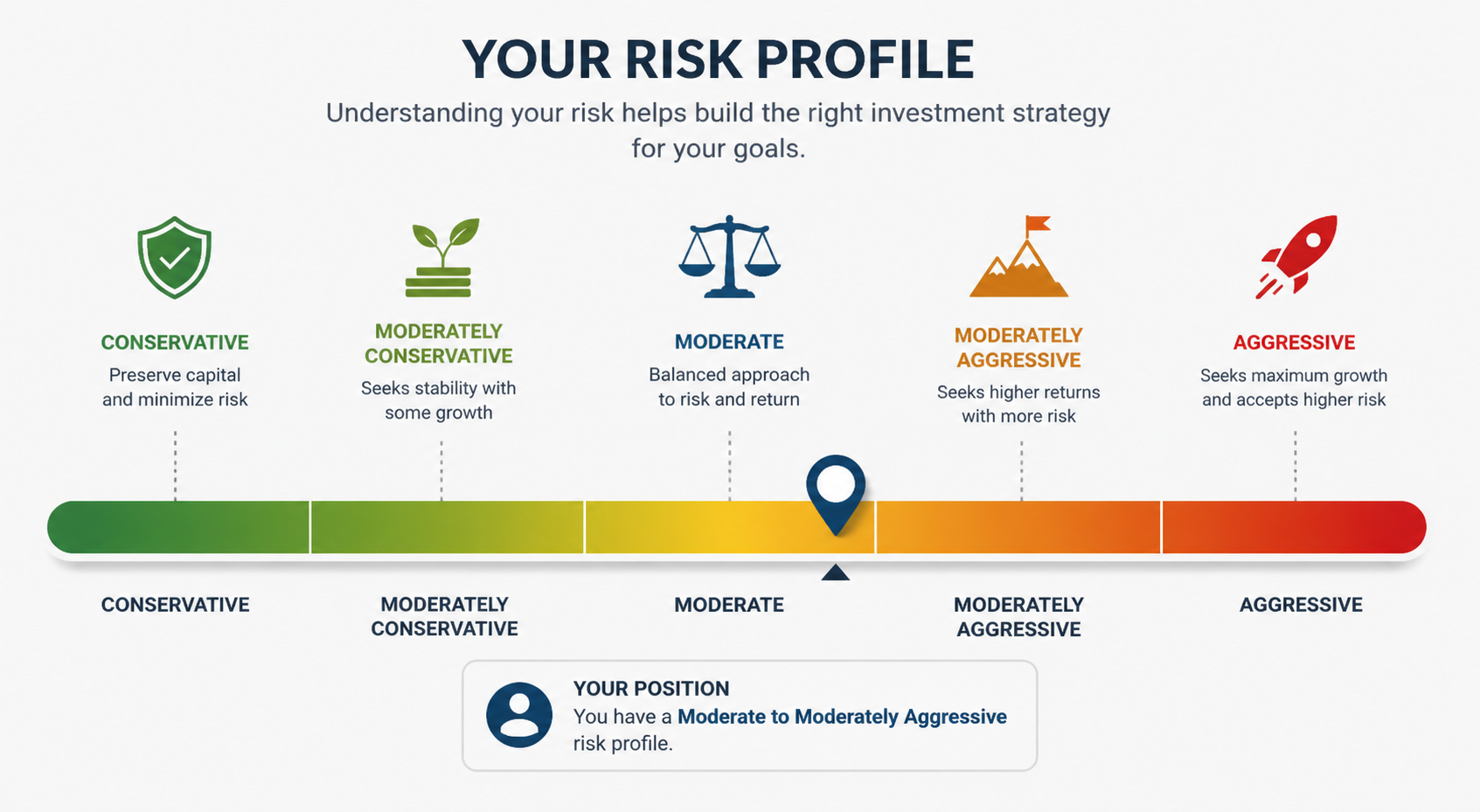
A risk profile, often determined through a risk profile assessment, is a foundational concept in financial planning and investing. Simply put, a risk profile is a comprehensive evaluation of an individual’s willingness and ability to take on investment risk. It combines emotional factors (risk tolerance) with financial realities (risk capacity), helping investors understand how much uncertainty or potential loss they can reasonably handle.
Read More
Topics:
Smart,
Risk Profile,
investing
Financial stress is extremely common today. According to recent surveys, 66% of Americans live paycheck to paycheck, and nearly 65% do not have enough savings to cover a $1,000 emergency, highlighting how fragile many household finances are.
Read More
Topics:
planning,
Finances